Corporate Mindfulness Workshops in the UK: A Buyer’s Guide for HR and People Teams
Choosing a corporate mindfulness workshop in the UK? Compare formats, ask the right questions and spot the red flags before you book.
Search for corporate mindfulness workshops in the UK and you will find dozens of providers, most describing themselves in almost the same words: "evidence-based", "practical", "tailored to your team". So how do you choose?
This guide is written from the provider's side of the table, so we know which questions we would want a buyer to ask. Use it whether you end up working with us or not.
First, decide what the workshop is for
Mindfulness is a broad term. A session to help a stretched team pause for an hour is very different from a programme designed to build a lasting practice. Be clear about your aim before you compare providers:
- Introduce the idea. A taster for people who have never tried mindfulness.
- Create a reset. A recovery moment after a demanding period, or alongside an offsite.
- Build a habit. A course with practice between sessions.
- Support leaders. Space for managers to reflect on pressure, decisions and how they show up for their teams.
Match the format to your aim
Workplace mindfulness training comes in a few common formats. Here is when each tends to suit, and what to know before you book:
- Short taster or lunch-and-learn. Good for introducing the idea to a large group. It is enjoyable and low-commitment, but unlikely to change habits on its own.
- Team reset (workshop or half-day). Good for recovery after a busy period, offsites and team events. It works best when it connects to the real pressures your team faces.
- Multi-week course (for example, six weeks). Good for building a practice people can keep. It needs time in the diary and some practice between sessions.
- Leadership programme. Good for managers who carry responsibility for others. It works best when leaders can speak openly in a trusted group.
There is no single best format. One session can be a good start, as long as nobody expects it to do the work of a course.
Questions to ask every provider
- Who will teach, and how long have they practised themselves? Teaching mindfulness well depends on personal experience as much as on a certificate.
- What is the teaching rooted in? Mindfulness comes from Buddhist contemplative traditions and has been adapted in many ways. A good provider can explain their approach clearly and is open about where it comes from.
- Is taking part voluntary? Mindfulness practices can bring up difficult feelings. People should be able to opt out, adapt or stop at any point.
- How do you handle sensitive situations? Ask how the facilitator responds if someone becomes upset, and how they point people to further support.
- How will the session fit our people? Ask about hybrid and remote delivery, time zones, and how the session adapts to your culture rather than following a standard script.
- What happens afterwards? Look for practice materials and a route for people who want to continue.
- What evidence do you rely on, and what are its limits? Research on workplace mindfulness is still developing, and results vary. A confident provider will say so.
Red flags
- Promises to "cure" burnout or guarantee specific percentage gains.
- Compulsory attendance, or pressure to share personal experiences in front of colleagues.
- A generic script, with no questions about your team beforehand.
- No clear information about the facilitator's own training and practice.
- Claims that mindfulness can replace support such as counselling, medical care or a reasonable workload.
Mindfulness is one part of the picture
Mindfulness can help people notice stress earlier and respond with more steadiness. It cannot fix an unmanageable workload or a poor working culture. The strongest approach combines good management and clear expectations with practical support for individuals. Our guide to preventing workplace burnout covers the organisational side, and our article on how to tell if your employee wellbeing programme is working shows how to check the results once you have started.
How Akanista works with teams
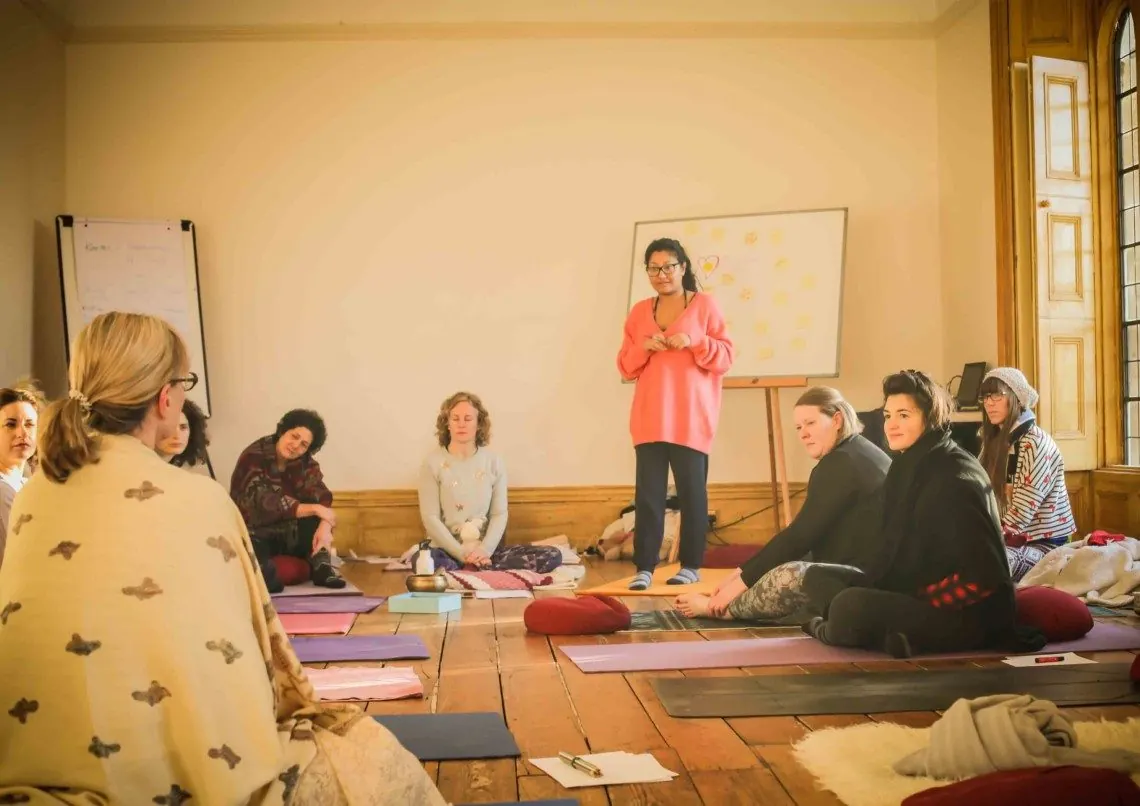
Akanista offers workplace resets, workshops, six-week mindfulness courses and mindful leadership programmes, in London or online. Our teaching is rooted in the Buddhist contemplative tradition and presented in plain, secular language, with no belief required. Sessions are adapted to the pressures each team actually faces, and taking part is always optional.
Request a proposal for your team →
Frequently asked questions
How much do corporate mindfulness workshops cost?
It depends on the format, group size and length, so reputable providers quote for your specific brief. We would rather understand what your team needs first.
Are mindfulness workshops suitable for remote or hybrid teams?
Yes, when they are live and interactive rather than pre-recorded. Ask providers how they keep a virtual room engaged.
Do employees need any prior experience?
No. Good employee wellbeing workshops are designed for complete beginners, with options for people who already practise.
Is mindfulness religious?
It comes from Buddhist contemplative traditions, but it can be taught in secular language without asking anyone to hold a belief. A good provider is open about the origins and clear that nobody is asked to adopt any belief.