Beyond the Helpline: What Makes an Employee Mental Health Programme Worth Using
What to look for in an employee mental health programme, and how facilitated mindfulness can sit alongside your EAP. A practical guide for HR leaders.
Most organisations now invest in some form of mental health support: an Employee Assistance Programme (EAP), a wellbeing app, awareness days, perhaps all three. These are worthwhile, and for someone in real difficulty a confidential counselling line can matter a great deal.
But many HR and People & Culture leaders find themselves asking a second question: how do we support people before they reach crisis, in a way they will genuinely want to take part in?
This article is not an argument against EAPs. It is a perspective on what a broader employee mental health programme can include, what to ask any provider before you commit, and where facilitated, contemplative practice can fit alongside what you already have.
What an EAP does well, and where the gaps can be
An EAP offers something important: confidential, professional support, available to individuals when they need it. That is hard to replace.
The gaps tend to come from how EAPs are designed rather than from any lack of care:
- They are usually individual and reactive. The employee has to recognise they need help, find the number and take the first step.
- They rarely address shared pressure. Team-wide stress, heavy workloads or a culture of being always on are not things one person can resolve in a counselling session.
- Uptake depends on awareness and trust. If people are not sure what is on offer or whether it is truly for them, it can go unused.
If you are reviewing your current provision, the most useful starting point is your own data. Ask your EAP provider for utilisation figures, and ask your people, through a short survey or conversation, what support they would actually use.
Three qualities worth looking for
These reflect how we design our own work. They are principles, not guarantees of any particular outcome.
Practical tools that fit into a working day
Most people do not have an hour to spare in the middle of a demanding week. Short practices of a few minutes, built around breath and attention, can be used between meetings or before a difficult conversation. They do not replace rest, manageable workloads or professional care, but they can help people notice stress earlier and respond more steadily.
Facilitation people can trust
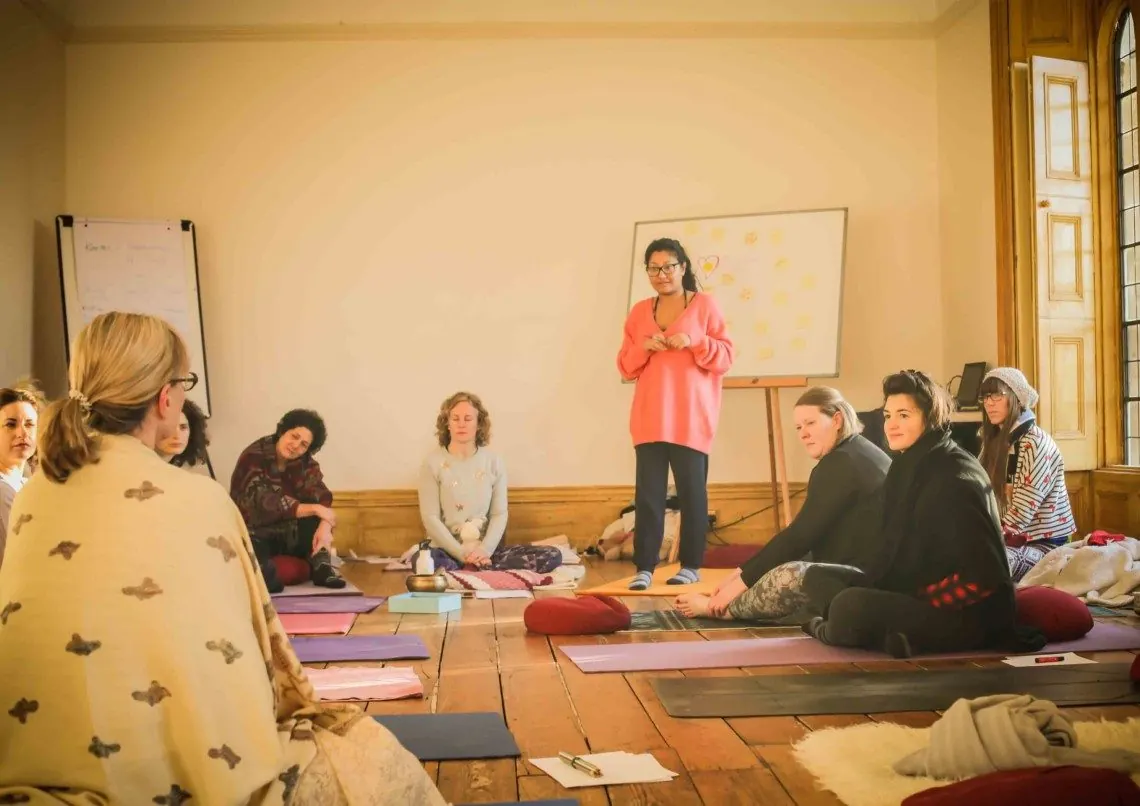
Who leads the session shapes how safe it feels to take part. Look for facilitators with real depth in the practices they teach and genuine understanding of working life, so the session feels relevant rather than generic.
Continuity beyond a single session
A one-off workshop can open a conversation, but habits form through repetition. Programmes that unfold over several weeks, with time to practise and reflect together, give people a realistic chance to make something part of their routine.
Questions to ask any wellbeing provider
Whether you are exploring corporate mindfulness workshops in the UK or reviewing your wider employee wellbeing offer, these questions help separate substance from surface:
- Who will facilitate, and what is their training and personal experience?
- How will the programme be adapted to our team and culture?
- How will we understand whether it is helping? Ask what feedback and engagement information you will receive, and be cautious of promises that sound too certain.
- What happens after the session? Look for follow-up and practice resources.
- Will it work for hybrid or remote teams? Live online sessions should feel interactive, not like a webinar.
- What does the evidence say? Research into workplace mindfulness is a growing field, and results vary with how programmes are designed and delivered. A good provider will be open about that.
How Akanista works with organisations
Akanista Wellbeing offers virtual workplace resets, six-week mindfulness courses and executive resilience programmes. Our approach draws on contemplative training and is shaped around the culture and pressures of each team we work with.
We have had the privilege of working with teams at organisations including Spotify, the NHS, Imperial College London and British American Tobacco.
We see our work as complementary to, not a replacement for, clinical support and good management. If you already have an EAP, we are happy to talk about how a facilitated programme could sit alongside it.
Let's talk about what your team needs
If you are exploring options for your people, we would be glad to hear what they are facing and share what might help.
Request an Enterprise Proposal for Your Team
Frequently asked questions
Is mindfulness a solution to workplace burnout?
Not on its own. Burnout often has organisational causes such as workload and culture, which practice alone cannot fix. Mindfulness can support people in noticing stress and responding to it more steadily, and works best alongside, not instead of, addressing those wider factors.
What is an EAP alternative?
More accurately, it is a complement. Facilitated workshops and multi-week programmes can offer proactive, group-based support alongside the confidential individual support an EAP provides.
Can mindfulness programmes work for remote and hybrid teams?
Yes, when sessions are live, interactive and designed for participation rather than passive viewing.
How long should a workplace wellbeing programme run?
That depends on your goals. A single session can introduce the ideas, while a programme of several weeks gives people time to practise and build habits.